
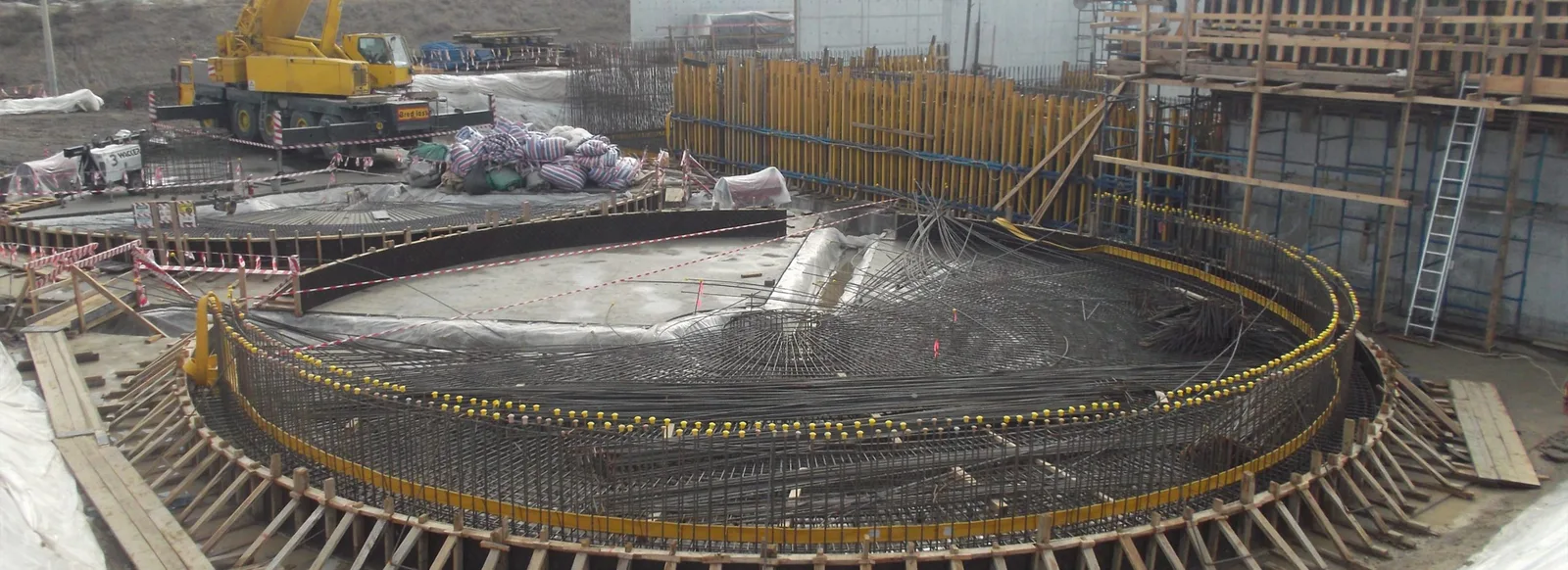
Infrastructure Construction in Libya: Roads, Water, Sewage and Utility Networks
Roads, water treatment, sewage and utility networks are at the center of Libya's recovery. Here is how infrastructure projects are delivered and what owners should expect from a contractor.
Infrastructure construction in Libya is about more than new roads and bridges. It is about restoring and extending the networks that every other project depends on: water supply, sewage collection and treatment, drainage, power distribution and the access roads that connect sites to ports and cities. When those systems fail, housing, hospitals and industrial facilities cannot function, however well they are built.
The need is visible across the country, and it became especially clear after the 2023 floods in the east. At the same time, long-delayed national programs are moving again, and reconstruction activity is creating steady demand for capable civil contractors.
This article looks at where Libya's infrastructure needs are concentrated, how these projects are typically delivered, and what owners should expect from an infrastructure contractor in Libya. ZALA Global writes from the perspective of an international group with a regional office in Benghazi and an extensive record of civil and utility works in demanding environments.
Libya's infrastructure needs after Storm Daniel
The September 2023 floods exposed how vulnerable aging infrastructure can be. In Derna, two dams upstream of the city collapsed during Storm Daniel. Local officials quoted at the time said the dams had not been maintained since 2002, and experts estimated that around 30 million cubic meters of water were released.
The joint World Bank, EU and UN Rapid Damage and Needs Assessment estimated recovery and reconstruction needs at about $1.8 billion. It found that roughly 70 percent of reconstruction costs relate to infrastructure, with housing as the largest component, and identified transport and water among the most affected sectors. In the immediate aftermath, the UN Humanitarian Coordinator warned that water sources and sewer networks had been severely damaged, raising the risk of waterborne disease.
Recovery has since become a major program in its own right. A reconstruction fund set up in 2024 to rebuild Derna has expanded into the Libya Development and Reconstruction Fund, and international reporting describes bridges, apartment blocks, schools and hospitals rising across eastern Libya.
Roads and transport corridors
Road corridors connect Libya's coastal cities with each other, with inland regions and with neighboring countries, and some major works stopped in 2011 have yet to be completed. In November 2025, Libya and Italy signed an agreement to build the 160-kilometer Al-Aziziya to Ras Jdir section of the coastal highway, part of a 1,750-kilometer coastal corridor linking Libya's main cities to the Tunisian border.
For a road construction company in Libya, these projects involve far more than paving. Typical scopes include:
- Earthworks, cut and fill, and subgrade preparation
- Drainage structures, culverts and flood protection
- Bridges, underpasses and retaining structures
- Asphalt production and paving, including on-site batching where supply is limited
- Relocation and protection of existing utilities
- Traffic management where works are carried out next to live roads
Flood events have also made hydraulic design a central part of road projects. Culverts, channels and bridge openings sized for historic rainfall may need to be revisited.
Water treatment, sewage and utility networks
Most water used in Libya comes from large fossil groundwater reserves, and the Great Man-Made River project was developed to carry that water from the desert to the coastal areas where most cities sit. Distribution networks, storage, treatment and sewage collection within cities are what turn that bulk supply into a working service.
Water treatment services in Libya, sewage services and wider utility services typically cover:
- Water supply — wells, pumping stations, transmission mains, storage tanks and distribution networks with valves, hydrants and service connections.
- Water treatment — treatment plants and disinfection systems for potable supply, and rehabilitation of existing plants.
- Sewage collection — gravity sewers, force mains, manholes and lift stations, particularly in areas where flooding damaged existing lines.
- Wastewater treatment — new plants, expansions and upgrades to restore capacity and protect groundwater.
- Stormwater drainage — channels, culverts and retention structures to reduce flood risk.
These projects are usually built in or next to occupied urban areas. That requires careful phasing to keep existing services running while new systems are installed and commissioned.
How infrastructure construction in Libya is delivered
Most infrastructure construction falls into one of three delivery models. Traditional design-bid-build remains common for public works where the owner has a completed design. Design-build and EPC contracts are increasingly used for treatment plants, pumping stations and other facilities where process performance matters. We explain the EPC model in our guide to choosing an EPC contractor in Libya.
Whatever the model, a civil construction company in Libya needs to manage the same core risks:
- Ground conditions. Geotechnical surprises are the most common cause of cost growth in civil works.
- Existing utilities. Undocumented pipes and cables are routine in older urban areas.
- Materials supply. Pipes, valves, pumps and electrical equipment are often imported and need early procurement.
- Commissioning. Networks and plants must be tested, disinfected and handed over with complete as-built records.
What to look for in an infrastructure contractor in Libya
When evaluating a civil engineering contractor in Libya, owners should ask for:
- Completed projects of a similar type, with quantities, not just project names
- Evidence of working in live environments without disrupting existing services
- In-house capability for earthworks, concrete and pipework, rather than full reliance on subcontractors
- A clear approach to QA/QC, testing and as-built documentation
- A local presence that can deal with authorities, suppliers and labor
Our broader guide to selecting a construction company in Libya covers commercial and contractual questions in more detail.
ZALA Global's civil and utility experience
ZALA Global's construction services include infrastructure works covering civil works, roads, utilities, site development and supporting infrastructure. Most of this experience comes from projects outside Libya, many delivered for government and military clients in demanding conditions.
- At Bagram Air Base, the MILCON Eastside Utilities Infrastructure project included four deep wells, 12,000 m of water distribution piping, 6,000 m of gravity sanitary sewer, 2,200 m of sanitary force main, three sewer lift stations, three utility bridges and expansion of the wastewater treatment plant.
- In Sierra Leone, the Freetown rainwater capture and storage system included a rainwater harvesting system, pipe network, water treatment plant and two steel storage tanks with a combined capacity of approximately 6.8 million liters.
- In Oman, the Duqm Port commercial terminal and operational zone covered a 90-hectare project site with a 2.3 km berth and 17 operational and administration buildings.
- In North Macedonia, the group completed the Konsko Dam, a rockfill dam with a diversion tunnel and associated structures, in 2019.
- Runway, taxiway and apron works at Bagram, Incirlik and Manas air bases reflect heavy civil and pavement experience.
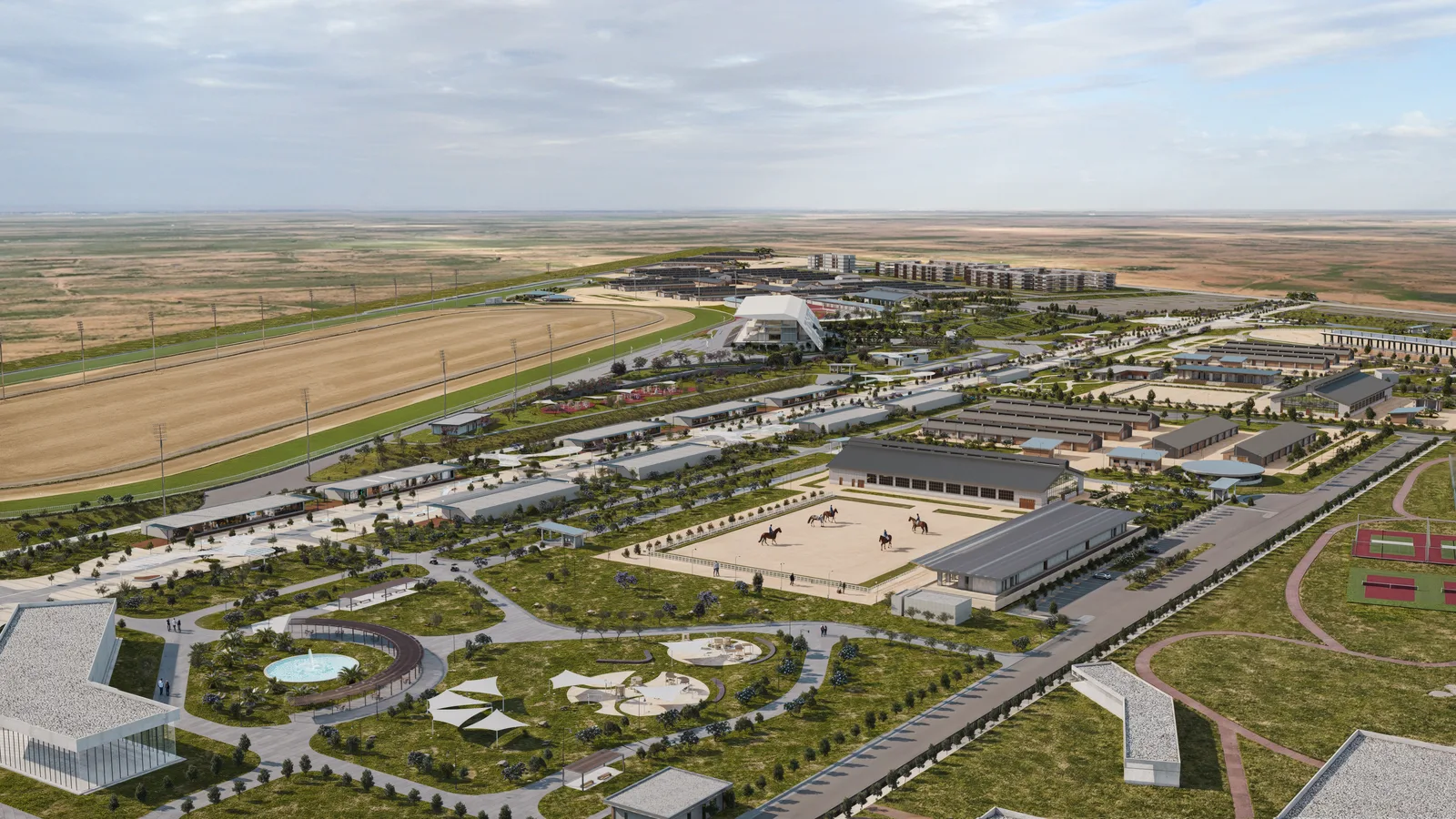
In Libya, ZALA Global operates a regional office in Benghazi. The group initiated the Benghazi Hippodrome Project there in 2025, an ongoing development whose scope includes landscaping and site infrastructure across a 1.5 million m² site.
Frequently asked questions
What does infrastructure construction include?
Infrastructure construction covers the networks and structures that support communities and facilities: roads, bridges, water supply, water and wastewater treatment, sewage, drainage, power distribution and site development works.
Why is water and sewage work a priority in Libya?
Water sources and sewer networks were severely damaged in the 2023 floods in eastern Libya, and transport and water were among the most affected sectors identified in the World Bank, EU and UN assessment. Reliable water and sewage systems are essential for public health and for any new development.
Can one contractor handle both roads and utilities?
Yes. Integrated infrastructure contractors commonly deliver roads, drainage, water and sewage networks as a single package, which reduces interface problems between trades and simplifies coordination with authorities.
Does ZALA Global work in Libya?
ZALA Global has a regional office in Benghazi and initiated the Benghazi Hippodrome Project in 2025. Its infrastructure experience was built largely on projects in Afghanistan, Oman, Sierra Leone, North Macedonia, Türkiye and elsewhere.
Plan your infrastructure project
If you are scoping road, water, sewage or utility works in Libya and want to discuss delivery options, our team is ready to help. Contact ZALA Global to speak with our construction team.
Work with us
Planning a project? Talk to our team.
Related articles
Construction Project Management in Libya: How to Keep Complex Projects on Schedule
A practical look at construction project management in Libya, from early planning and procurement to site controls, quality, safety and handover.
EPC Contractor in Libya: How Engineering, Procurement and Construction Work Together
A practical guide to EPC contracting in Libya: what single-point responsibility covers, where the risks sit, and what owners should ask before awarding an EPC contract.

Turnkey Construction in Libya: Delivering Commercial, Industrial and Public Buildings
How turnkey construction works for commercial, industrial and public buildings in Libya, and what owners should define before appointing a single contractor to deliver a ready-to-use facility.