
Construction Project Management in Libya: How to Keep Complex Projects on Schedule
A practical look at construction project management in Libya, from early planning and procurement to site controls, quality, safety and handover.
Construction project management in Libya is less about the software you run and more about control: control of the schedule, of the supply chain, of quality on site and of the information that reaches the owner. Projects that run well in Libya are planned for the conditions they will actually meet, not for the conditions written into a standard contract.
The pipeline is real. After Storm Daniel struck eastern Libya in September 2023, a joint World Bank, EU and UN assessment put recovery and reconstruction needs at about US$1.8 billion, with roughly 70 percent of that tied to infrastructure and housing the largest single component. Alongside recovery work, owners in the public and private sectors continue to commission buildings, utilities and mixed-use developments.
This guide explains how a disciplined construction project management approach works on construction projects in Libya, what owners should expect from their contractor or project manager, and where projects most often lose time and money.
Why construction projects in Libya need a different management model
Most of the tools are universal: a baseline schedule, a cost plan, a risk register, a quality plan. What changes in Libya is the weight each of them carries.
- Supply chains are long. Many specialist materials and systems are imported, so procurement lead times drive the critical path more than on-site productivity does.
- Utilities on site cannot be assumed. Oxford Business Group notes that Libya has faced a power production deficit for several years. Temporary power, water and fuel for site operations need their own plan.
- Stakeholders are many. Owners, municipalities, utilities, consultants and end users all have approval points. Missing one can stop work for weeks.
- The institutional landscape is evolving. The World Bank's 2025 Libya Economic Monitor highlights the large role of state-owned enterprises across strategic sectors, including utilities. Interfaces with these bodies need to be identified early.
None of this makes Libya unworkable. It means the project management plan has to address these issues explicitly instead of treating them as exceptions.
Construction project management in Libya: plan, procure, control
Effective construction project management rests on three activities that run in parallel from day one.
Planning that reflects reality
A credible baseline schedule is built from the bottom up: design release dates, long-lead procurement, mobilization, permits, and realistic productivity rates for local and expatriate crews. In Libya, the schedule should also show import and customs durations as distinct activities, so slippage is visible early instead of buried in a construction task.
Procurement as a schedule activity
On most international projects in the region, procurement decides whether a project finishes on time. Good practice includes:
- Identifying long-lead items (switchgear, generators, HVAC plant, elevators, specialist finishes) during design, not after it.
- Pre-qualifying suppliers with proven export and logistics capability.
- Tracking every major order from purchase to delivery on site, with expediting reports reviewed weekly.
- Holding critical spares and consumables on site where interruption would stop a crew.
Control through measurement
Progress should be measured physically, not estimated. Earned value, quantity tracking and photo-verified reports let the owner see the real position. Monthly reports should compare progress against baseline and show the forecast to completion, not just the work done.
Quality, safety and site discipline
Owners in Libya often carry the risk of rework long after handover. A structured QA/QC system protects them.
- Inspection and test plans for every discipline, agreed with the owner's engineer before work starts.
- Material approvals and traceability, especially for concrete, steel and imported systems.
- Hold points that cannot be passed without sign-off.
- Snag management throughout the job, not only in the final month.
Health, safety and environment (HSE) management sits alongside quality. A site-specific HSE plan, daily toolbox talks, permit-to-work systems for high-risk activities and incident reporting are baseline expectations on any international project. On ZALA Global's New U.S. Embassy Compound project in Ankara, the company managed all aspects of the project, including QA/QC and HSE functions, with its own established teams on site. That is the standard of control owners should look for.
Working in live and sensitive environments
Many Libyan projects are built next to, or inside, facilities that must keep operating: airports, hospitals, government compounds, industrial sites. Phasing and interface management become central.
ZALA's experience includes the repair of Runway 03/21 at Bagram Air Base, where repairs were planned in phases while airfield operations continued, and the JSS Shield design-build project in Baghdad, a fast-track scheme delivered within an occupied and fully operational government compound. The lessons transfer directly: agree phasing with the operator, protect live services, control access and keep the facility's users informed.
Project governance and reporting for owners
The owner's confidence depends on transparent reporting. A sound governance structure for construction projects in Libya usually includes:
- A single accountable project director on the contractor side, with authority to commit resources.
- A clear responsibility matrix covering design, procurement, construction and commissioning.
- Weekly progress meetings on site and monthly steering meetings with the owner.
- A change management procedure that prices and approves variations before work proceeds.
- A document control system that keeps drawings, approvals and correspondence in one place.
Where a project combines several delivery models, for example design-build packages within a larger program, governance must make the interfaces explicit. Our guide to EPC contracting in Libya explains how responsibility shifts under different contract forms.
Local presence, international systems
The most reliable model in Libya combines local presence with international management systems. A local team understands permits, suppliers, labor and logistics. International systems bring the planning, cost control, QA/QC and HSE discipline that owners and financiers expect.
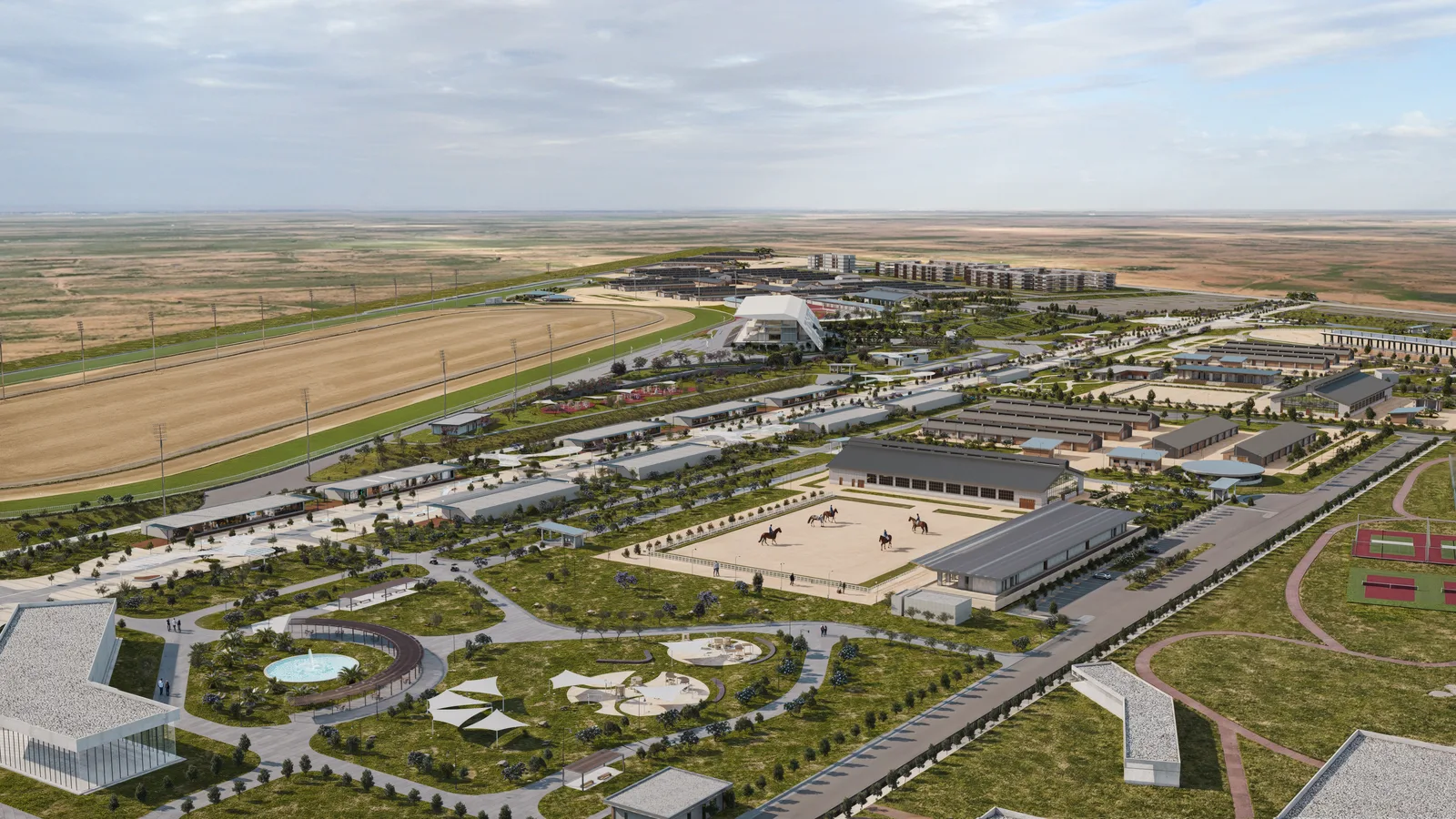
ZALA Global has a regional office in Benghazi and is delivering the Benghazi Hippodrome Project, a large equestrian and mixed-use development on a 1.5 million m² site that includes racing tracks, stables, a horse hospital, a hotel, a mosque, a shopping center and site infrastructure. A program of that breadth requires coordinated management of multiple building types, landscaping and utilities on a single site.
Outside Libya, the company's construction and contracting track record covers government, military, diplomatic and infrastructure work in Türkiye, Iraq, Afghanistan, Oman, Kyrgyzstan, Qatar, Saudi Arabia and elsewhere, delivered through turnkey, EPC and design-build models.
Frequently asked questions
What does a construction project manager do on a project in Libya?
The project manager plans and controls schedule, cost, procurement, quality and safety on behalf of the delivery team, and reports to the owner. In Libya, particular attention goes to import lead times, temporary site utilities and coordination with public bodies.
Should procurement be managed locally or internationally?
Usually both. Bulk materials can often be sourced locally or regionally, while specialist equipment is imported. The project manager should track every long-lead item from order to delivery as part of the schedule.
How can owners reduce risk on construction projects in Libya?
Define scope and approval points early, require a resource-loaded baseline schedule, insist on a written QA/QC and HSE plan, and agree a change management procedure before work starts. Monthly reporting against baseline gives early warning of slippage.
Can construction project management be combined with operations after handover?
Yes. Planning for operations during construction, including commissioning, training and maintenance manuals, shortens the transition to a working facility. Some owners also contract facility management or support services from the same group.
Talk to us about your project
If you are planning construction projects in Libya and need a partner with international management systems and a presence in Benghazi, contact ZALA Global to discuss scope, delivery model and schedule.
Work with us
Planning a project? Talk to our team.
Related articles
EPC Contractor in Libya: How Engineering, Procurement and Construction Work Together
A practical guide to EPC contracting in Libya: what single-point responsibility covers, where the risks sit, and what owners should ask before awarding an EPC contract.
Infrastructure Construction in Libya: Roads, Water, Sewage and Utility Networks
Roads, water treatment, sewage and utility networks are at the center of Libya's recovery. Here is how infrastructure projects are delivered and what owners should expect from a contractor.

Turnkey Construction in Libya: Delivering Commercial, Industrial and Public Buildings
How turnkey construction works for commercial, industrial and public buildings in Libya, and what owners should define before appointing a single contractor to deliver a ready-to-use facility.