
Real Estate Development Company in Libya: Residential, Mixed-Use and Serviced Living
What investors and landowners should expect from a real estate development company in Libya, from feasibility and land due diligence to residential, mixed-use and serviced residence delivery.
Choosing a real estate development company in Libya is rarely a question of who can pour concrete. Landowners, investors and public bodies need a partner that can test a site, shape a product the market will absorb, coordinate design, build to a reliable standard and plan for how the asset will be run after handover. Residential and mixed-use schemes succeed or fail on decisions made long before the first excavator arrives.
Libya's housing market has a clear need for that discipline. Housing research describes a severe shortage, particularly in urban areas, while much of the country's housing has historically been delivered either by the public sector or by households building for themselves. At the same time, a large share of the population lives in cities, so demand concentrates where land, utilities and approvals are hardest to secure.
This article explains how an integrated developer approaches residential development in Libya, where mixed-use and serviced residence concepts fit, and how ZALA Global combines its development, construction and operations experience with a regional office in Benghazi.
The Libyan residential market: demand and constraints
The Centre for Affordable Housing Finance in Africa (CAHF) estimates that around 82% of Libyans live in urban areas and describes a severe housing shortage in cities. Its 2024 country profile also notes that many Libyans build their own homes using their own plans and contractors, that the cost of construction materials and labor constrains private supply, and that only a minority of urban residents hold formal land titles, with many land records still held on paper.
Natural disasters have added to the pressure. A joint World Bank, EU and UN assessment of the September 2023 floods found that more than 18,500 houses were destroyed or damaged, equivalent to about seven percent of the national housing stock, with housing the largest single component of recovery needs.
For a developer, these conditions translate into practical priorities:
- Land and title due diligence before any design spend, given the state of land records.
- Cost control on materials and labor, which directly affects what price point a scheme can reach.
- Phased delivery, so that early phases can be completed, occupied and financed before later ones begin.
- Utility self-reliance where public networks are weak, since the World Bank notes that service delivery, including water and electricity, remains weak in parts of the country.
What a real estate development company in Libya should deliver
A development partner earns its fee by reducing risk across the full lifecycle, not only during construction. ZALA Global's hospitality and real estate practice covers concept development, feasibility and positioning, design coordination, construction, opening and operation. In practice, that means:
- Feasibility and product definition. Unit mix, density, amenities and target buyer or tenant profile, tested against what the local market can pay.
- Master planning. Plot layout, access roads, utilities, open space and phasing for a coherent community rather than a collection of buildings.
- Design coordination. Architectural, structural and MEP design aligned with the budget and with buildability on site.
- Construction delivery. Turnkey or design-build execution with one accountable contractor, QA/QC and HSE management.
- Handover and operation. Snagging, commissioning, and either transfer to the owner or ongoing management of the completed asset.
The value of an integrated model is that each stage informs the next. A construction team that will also operate a building tends to make different, more durable choices about finishes, plant and maintenance access.
Residential development in Libya: from master plan to handover
Residential schemes range from single apartment blocks to master-planned communities with schools, retail and green space. As a residential contractor in Libya, the developer's construction arm is responsible for infrastructure and superstructure together: roads, drainage, water and sewer networks, power distribution and the buildings themselves.
ZALA Global's construction capability covers infrastructure works such as civil works, roads, utilities and site development, alongside superstructure works for residential, commercial, administrative and institutional buildings. Its residential references include the design-build of 44 military family housing units under Eagle Family Housing, Phase III at Incirlik Air Base, delivered with asphalt roads, sports and recreation areas, community sidewalks and landscaping to strict military housing criteria. That combination of housing units and supporting community infrastructure is the same pattern a Libyan residential community requires.
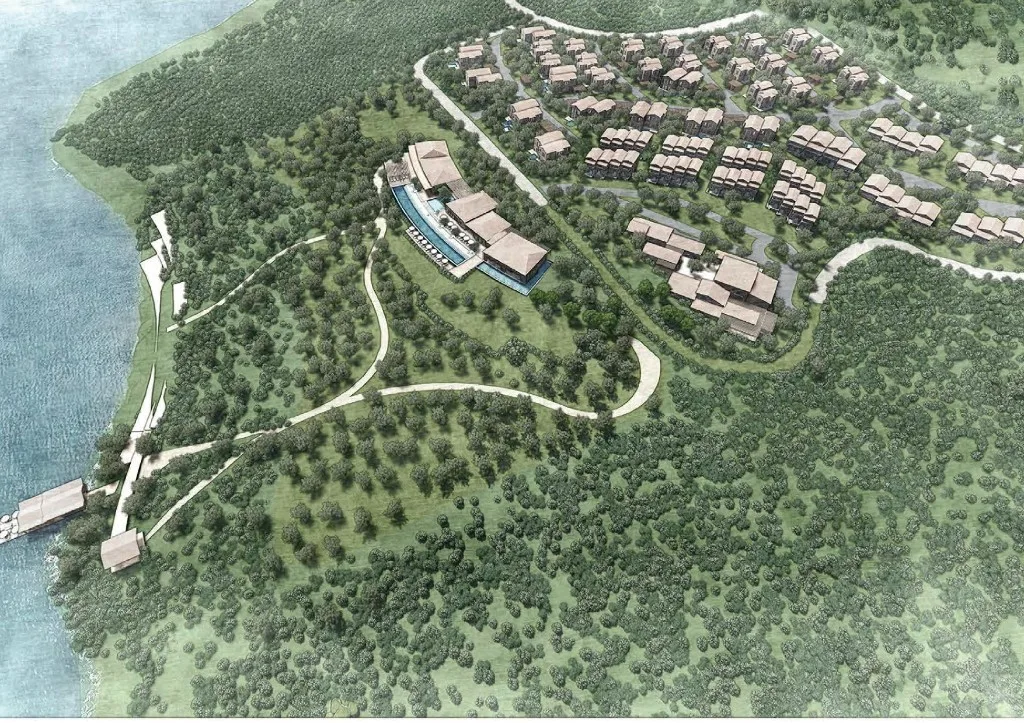
The group's diversified portfolio also includes Novaterra Real Estate, a nature-integrated residential site development, reflecting an interest in communities designed around landscape rather than simply plot density.
Mixed-use development in Libya
Mixed-use development combines residential, retail, office, hospitality, leisure and community components on one site. Done well, it spreads risk across revenue streams and creates places people use throughout the day. Done badly, it produces under-occupied commercial space and conflicting traffic and servicing requirements.
The most relevant reference here is in Libya itself. ZALA Global's Benghazi Hippodrome Project, initiated in 2025, is a large-scale equestrian and mixed-use development on a 1.5 million m² site. Alongside racing tracks, stables, a horse hospital and a museum, it incorporates a hotel, mosque, shopping center, recreational areas, service buildings, landscaping and site infrastructure, creating an integrated destination for sport, tourism and public use.
Projects of this kind demand careful planning of:
- Zoning within the site, so that public, commercial and service functions do not compete for the same access routes.
- Shared infrastructure, sized for the whole development rather than added building by building.
- Phasing, so that anchor components open first and generate activity for later phases.
Serviced residence and branded residence development
Serviced residences and branded residences sit between real estate and hospitality. Residents or owners receive hotel-style services such as housekeeping, concierge, maintenance and security, and in the branded model the scheme is aligned with an established hospitality brand's standards.
ZALA Global lists residential and serviced living, including vacation homes, serviced residences, branded residences and master-planned communities, among its hospitality and real estate capabilities. Its Alaçatı Hotel & Residence development in Türkiye combines 84 hotel rooms with 100 residences on a 72,000 m² site, served by a port, beach, restaurants, pools and other amenities. The group has also developed and operated its own hotels, which informs how residential components share services with a hotel operation.
For serviced residence development, the critical design decisions include:
- Back-of-house planning that lets service teams reach every unit efficiently.
- Shared plant and amenities sized for both hotel guests and residents.
- Brand standards agreed early, since operator requirements affect layouts, finishes and systems.
- An operating model that defines who manages the residences, how service charges are set and how the asset is maintained.
Investors exploring branded residence development in Libya should treat the operator agreement as a design input, not a marketing step after construction. Our article on hotel construction in Libya covers the operator side in more detail.
Managing development risk in Libya
Libya's economy remains heavily dependent on hydrocarbons, and the World Bank describes growth as constrained by years of conflict, underinvestment and weak infrastructure. That context does not rule out real estate investment, but it rewards conservative structuring:
- Phase commitments so that capital is released as milestones are met.
- Procure long-lead materials early and plan for import logistics.
- Use a single accountable contractor under a turnkey or design-build contract to limit interface risk.
- Plan operations from day one, including facility management, utilities and maintenance budgets.
ZALA Global approaches this as an international group with experience in complex and high-risk environments and a regional office in Benghazi. Most of its track record lies outside Libya, across Türkiye, Iraq, Oman, Qatar, Saudi Arabia, the United States and other markets, which gives Libyan clients access to processes tested in comparable conditions. You can see the wider portfolio on our projects page.
Frequently asked questions
What does a real estate development company in Libya do?
It takes a project from land and feasibility through master planning, design coordination, construction and handover. Integrated developers also plan or run operations, so the completed asset performs as intended.
Is mixed-use development viable in Libya?
It can be, when the scheme is phased and the components support each other. Projects such as the Benghazi Hippodrome combine sport, hospitality, retail and public space on one site to create a destination with several sources of activity.
What is the difference between a serviced residence and a branded residence?
A serviced residence offers hotel-style services to residents. A branded residence adds alignment with an established hospitality brand's design and service standards, usually under an operator agreement.
Does ZALA Global have an office in Libya?
Yes. ZALA Global has a regional office in Benghazi and is delivering the Benghazi Hippodrome Project, supported by the group's international construction and operations teams.
Plan your development with ZALA Global
Whether you hold land for a residential community, a mixed-use destination or a serviced residence scheme, early decisions set the outcome. Learn more about our hospitality and real estate capabilities or contact our team to discuss feasibility, design and delivery for your project in Libya.
Work with us
Planning a project? Talk to our team.
Related articles
Hotel Construction Company in Libya: From Concept to Opening Day
How hotels in Libya are taken from concept to opening day, and why owners benefit from a partner that builds and operates hotels.
Construction Project Management in Libya: How to Keep Complex Projects on Schedule
A practical look at construction project management in Libya, from early planning and procurement to site controls, quality, safety and handover.
EPC Contractor in Libya: How Engineering, Procurement and Construction Work Together
A practical guide to EPC contracting in Libya: what single-point responsibility covers, where the risks sit, and what owners should ask before awarding an EPC contract.